
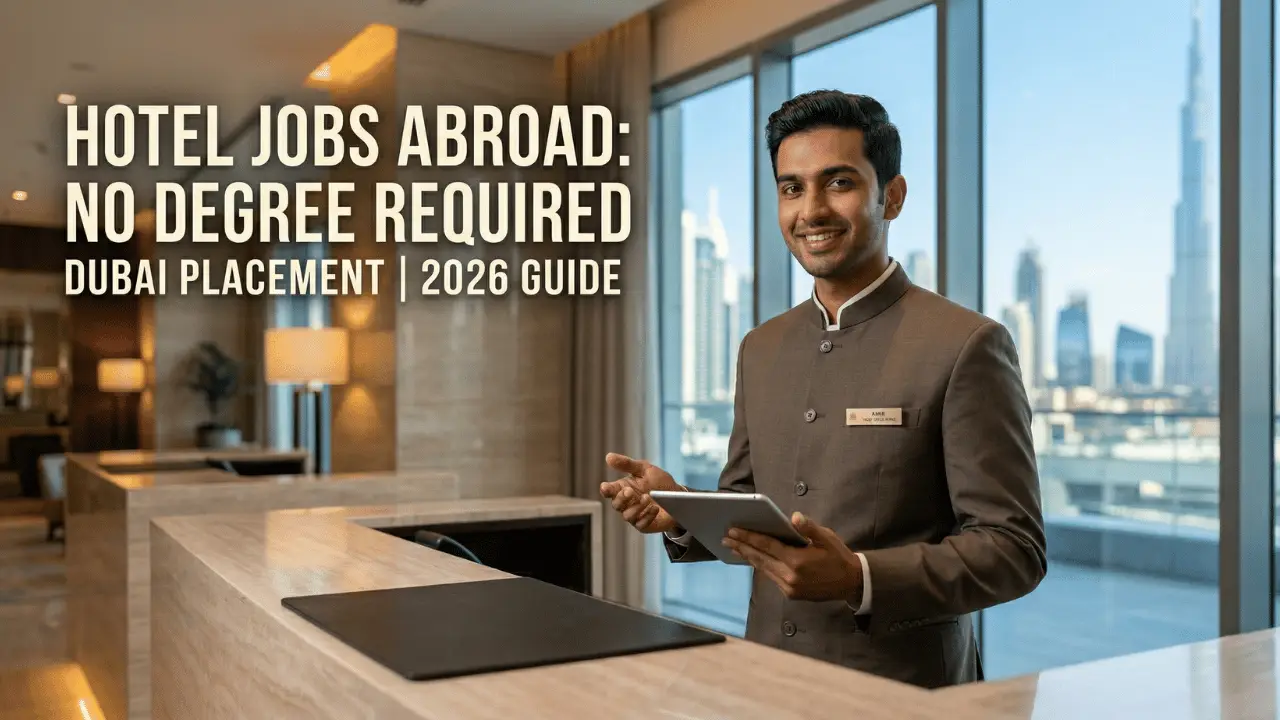
Every year, thousands of people talk themselves out of applying for international hospitality jobs because they assume a university degree is the price of entry. In 2026, that assumption is not just outdated — it is costing people real opportunities. The global hotel industry is facing one of its most severe labor shortages in history, and employers from Dubai to Brisbane are actively recruiting based on attitude, people skills, and hands-on experience. If you have been holding back, this guide on hotel jobs abroad without degree requirements will show you exactly where to go, what roles to target, and how to get hired this year.
Why 2026 Is the Best Year to Pursue Hotel Jobs Abroad Without a Degree
The numbers behind the current hospitality labor market are hard to ignore. International travel has fully surpassed pre-pandemic levels, and the World Travel and Tourism Council projects a global hospitality labor shortfall approaching 18% across entry and mid-level roles. That gap is not being filled by degree holders fast enough — because there simply are not enough of them entering the workforce at the pace the industry needs.
What this means for job seekers is straightforward: leverage. Hotels that once filtered CVs by qualification are now filtering by availability, language skills, and personality. The industry has, out of necessity, shifted its hiring criteria. Vocational training, short certifications, and real-world experience now carry more weight than a four-year business degree in many international markets.
There is also a timing factor worth noting. April 2026 marks the start of peak hiring season for European destinations. Hotels and resorts in Malta, Croatia, Greece, and other Mediterranean markets are actively onboarding staff right now for the summer rush. If you are reading this in spring, you are entering the market at exactly the right moment.

Complete Guide to Study + Work in Canada: What Every International Student Must Know in 2026
Top Countries Hiring Hospitality Staff Without Degree Requirements
Not every country treats hospitality hiring the same way. Some markets are far more accessible to degree-free candidates than others, and a handful of destinations in 2026 are going out of their way to attract international talent.
UAE (Dubai and Abu Dhabi) remains one of the most attractive destinations for hotel work overseas. With over 200,000 active hospitality vacancies and a tax-free salary structure, it continues to draw workers from across Asia, Africa, and Europe. Entry-level salaries typically range from $800 to $1,200 per month, and many employers include housing and meals as part of the package. Functional English and a professional presentation are usually enough to get your foot in the door.
Germany has introduced its Opportunity Card (Chancenkarte), a visa specifically designed to allow international job seekers to enter the country and secure employment. With severe hospitality shortages in major cities and resort areas, monthly salaries for entry-level hotel roles run between €1,800 and €2,500. The government’s official Make-it-in-Germany portal (make-it-in-germany.com) is the best place to verify current visa requirements and eligibility criteria.
Australia is another strong option, particularly for travelers under 35. The Working Holiday visa and the newer Skills in Demand visa both open doors to hospitality work, with monthly earnings typically between $3,500 and $4,500 AUD for entry-level positions. Regional and resort properties frequently offer accommodation on site. Visa details are verified through the Australian Department of Home Affairs at homeaffairs.gov.au.
Canada is experiencing a well-documented labor gap in rural and resort hospitality, especially in provinces like British Columbia, Alberta, and Ontario. Monthly salaries in the $2,800 to $3,500 CAD range are common, and many employers in resort areas sponsor work permits with pathways to permanent residency for long-term staff.
Malta and Croatia are particularly relevant right now given the season. Both countries represent the easiest entry points into European hotel work for seasonal roles, with monthly earnings between €1,000 and €1,400 during the summer months. Malta operates within the EU’s free movement framework, and Croatia has streamlined its seasonal worker permit process following strong demand from the tourism sector. Summer hiring in both countries peaks between March and May, which makes right now the critical application window.
Highest-Demand Roles in Hotel Jobs Abroad Without Degree Requirements
Understanding which positions are actively hiring is half the battle. In 2026, the roles with the highest vacancy rates across international hotel markets are concentrated in guest-facing and operational departments.
📋 Latest Updates



Front Office and Guest Relations roles — including receptionists, concierges, and guest service agents — are among the most accessible. Strong spoken English, a professional appearance, and basic computer literacy are the typical requirements. Many luxury chains now conduct initial interviews via video call and hire internationally without requiring candidates to relocate first.
Food and Beverage (F&B) is another high-demand area. Servers, bartenders, baristas, and restaurant hosts are in shortage across virtually every major hotel market. The demand is significant enough that many luxury and mid-scale hotel chains now offer on-the-job certification programs, meaning you can qualify while you earn. A background in any customer-facing F&B role — even domestic experience — is enough to land interviews.
Housekeeping and Room Operations are experiencing a 20% vacancy rate in several key markets. This is one of the few sectors where many employers in the Middle East and parts of Eastern Europe actively offer free visa packages, covering visa fees, flights, and initial accommodation to attract candidates quickly. The physical nature of the work and the relatively short training period make it a fast entry point for newcomers.
Commis Chef and Kitchen Assistant positions are ideal for people with a genuine interest in food who do not hold a formal culinary degree. Entry-level kitchen roles do not require culinary school credentials, and many hotel kitchens actively prefer candidates who trained informally but demonstrate curiosity and discipline on the job.
The 2026 Fast-Track Strategy for Getting Hired
Knowing where the jobs are is one thing. Getting hired ahead of other applicants requires a sharper approach. Here is what works in the current hiring environment.
Certifications beat degrees at the entry level. Instead of spending years in university, spend three months getting a vocational certificate in a targeted area. Food Safety (HACCP-based qualifications), Mixology, and Property Management Systems — particularly Opera, which is the industry standard — are all qualifications that hiring managers in major hotel groups actively look for. These carry more direct weight for an entry-level role than a general business degree.
Optimize your CV for AI-driven recruitment systems. Marriott, Hilton, Accor, and most large international hotel groups now run CVs through automated screening before a human recruiter sees them. Your CV needs to include terms that hospitality ATS systems flag as relevant: “Guest Experience,” “Cultural Adaptability,” “Conflict Resolution,” and “Service Standards.” Use these naturally throughout your work history section rather than cramming them into a summary paragraph.
Target Bleisure hubs. Business travel in 2026 has evolved into what the industry calls “Bleisure” — a blend of business and leisure, where guests extend corporate trips for personal time and expect hotel services that cater to both. Cities like Singapore, Berlin, and Brisbane are investing heavily in hotel facilities that include co-working spaces, wellness programs, and extended stay services. Hotels in these locations are hiring extra staff to manage this expanded scope, and candidates who understand or have experience with this hybrid guest profile are in high demand.
Prioritize employers offering Free Visa packages. In the Middle East and parts of Eastern Europe, many employers cover the full cost of visas, flights, and initial accommodation to attract talent quickly. These packages represent significant financial value and eliminate one of the biggest barriers for first-time international job seekers. When searching job boards, filter specifically for listings that include “visa provided” or “accommodation included” in the benefits.
Essential Requirements for Hotel Jobs Abroad Without a Degree
The baseline requirements for international hotel work in 2026 are more accessible than most people expect.
Age eligibility for working holiday visas typically falls between 18 and 40, though this varies by country and visa type. Standard work permits usually have no upper age limit, though some countries set maximum thresholds for employer-sponsored entry roles.
Language requirements at the entry level are functional rather than academic. Conversational English is the universal standard across international hotel markets. IELTS and TOEFL scores are generally not required for hospitality roles — a basic spoken assessment or informal interview is the standard. If you are applying to French-speaking markets (Canada, Belgium, parts of Switzerland), basic French is a meaningful advantage.
Your passport needs to be valid for at least 12 to 18 months beyond your intended travel date. Many visa applications will be rejected if this threshold is not met, so check your passport’s expiry before applying.
Prior experience matters but is not always mandatory. Six months to one year of hospitality or customer service experience — even in a domestic setting — significantly strengthens your application and opens doors to better-paying positions from the start.
The Green Hospitality Advantage in 2026
One differentiator that carries genuine weight in 2026 interviews is sustainability knowledge. Green Hospitality is no longer a trend — it is a core operational priority for most mid-scale and luxury hotel brands globally. Hotels are under increasing pressure from corporate clients and travelers alike to demonstrate measurable sustainability practices.
Candidates who can speak credibly about waste reduction, energy conservation, responsible sourcing, or sustainable guest experience during their interview immediately stand out. This does not require formal training. Familiarizing yourself with common hotel sustainability frameworks — such as EarthCheck or Green Key — and being able to reference specific practices you have observed or implemented in any previous role is more than enough to make a strong impression.
Who Should Seriously Consider Hotel Jobs Abroad Without Degree Paths
International hotel work without a degree is not the right fit for everyone, but for certain profiles, it is an excellent match.
Recent school leavers who are not ready for university, or who want to build real-world experience before committing to further study, will find that two to three years in international hospitality provides a career foundation that no classroom can fully replicate. The language skills, cross-cultural communication, and operational knowledge gained abroad translate directly to almost any future career path.
Career changers from retail, food service, healthcare, or any other customer-facing industry will find that their transferable skills are valued and recognized in international hotel hiring. The barrier to entry is lower than it appears, and the salary uplift in markets like Australia and Germany is significant compared to equivalent domestic roles.
People with specific language skills beyond English — Arabic, Mandarin, German, French, or Portuguese — are in particularly high demand in international markets catering to those traveler demographics. A language advantage can place a non-degree candidate above degree-holding competitors in guest-facing roles.
A Practical Note on Using This Guide
The salary figures in this article are current estimates based on available industry reporting as of early 2026. For verified, up-to-date visa requirements, always consult the official government portals directly: Australia’s Department of Home Affairs (homeaffairs.gov.au), Germany’s Make-it-in-Germany portal (make-it-in-germany.com), and Canada’s Immigration and Citizenship portal (canada.ca/immigration) are the definitive sources for eligibility and application procedures.
Job boards worth checking for international hospitality roles include Hosco, Hcareers, and the career portals of major chains including Marriott Bonvoy Careers, Hilton Careers, and Accor’s Talent Connect platform.
Conclusion: Your International Hotel Career Starts With One Application
The case for pursuing hotel jobs abroad without a degree has never been stronger than it is in 2026. A genuine global labor shortage, flexible visa frameworks, employer-sponsored relocation packages, and a hiring culture that values people skills over paper qualifications have all aligned in favor of motivated candidates who are ready to move.
The European summer season is hiring right now. The Middle East runs year-round. Australia and Canada have structured visa pathways designed for exactly this kind of career move. The practical barriers are lower than they have been in a decade.
Update your CV to reflect the keywords that hospitality ATS systems are scanning for. Pick up a short vocational certification in one targeted area. Research the Free Visa packages in the UAE or Eastern Europe if cost is a concern. And apply — because the window for this level of demand is not guaranteed to last forever.
The world’s hotels are understaffed, and they are looking for people like you.
So here is the question worth sitting with: which destination matches your goals well enough to send your first application this week?
